
Epoxy Resin for Beginners: A Practical Starter Guide for Indian Resin Artists

Resin art looks easy on Instagram: pour, swirl, done. In reality, most first-time failures come from using the wrong materials or skipping basic steps. This guide covers what epoxy resin is, what you need to start, and the mistakes that waste money. In short, a practical starter guide for Epoxy Resin for Beginners.
What Is Epoxy Resin?
Epoxy resin is a two-part system: a resin and a hardener. When you mix them in the correct ratio, a chemical reaction turns the liquid into a hard, glossy solid. It is used for coasters, jewellery, trays, clock art, geode art, river tables and preservation work.
Types of Resin for Beginners
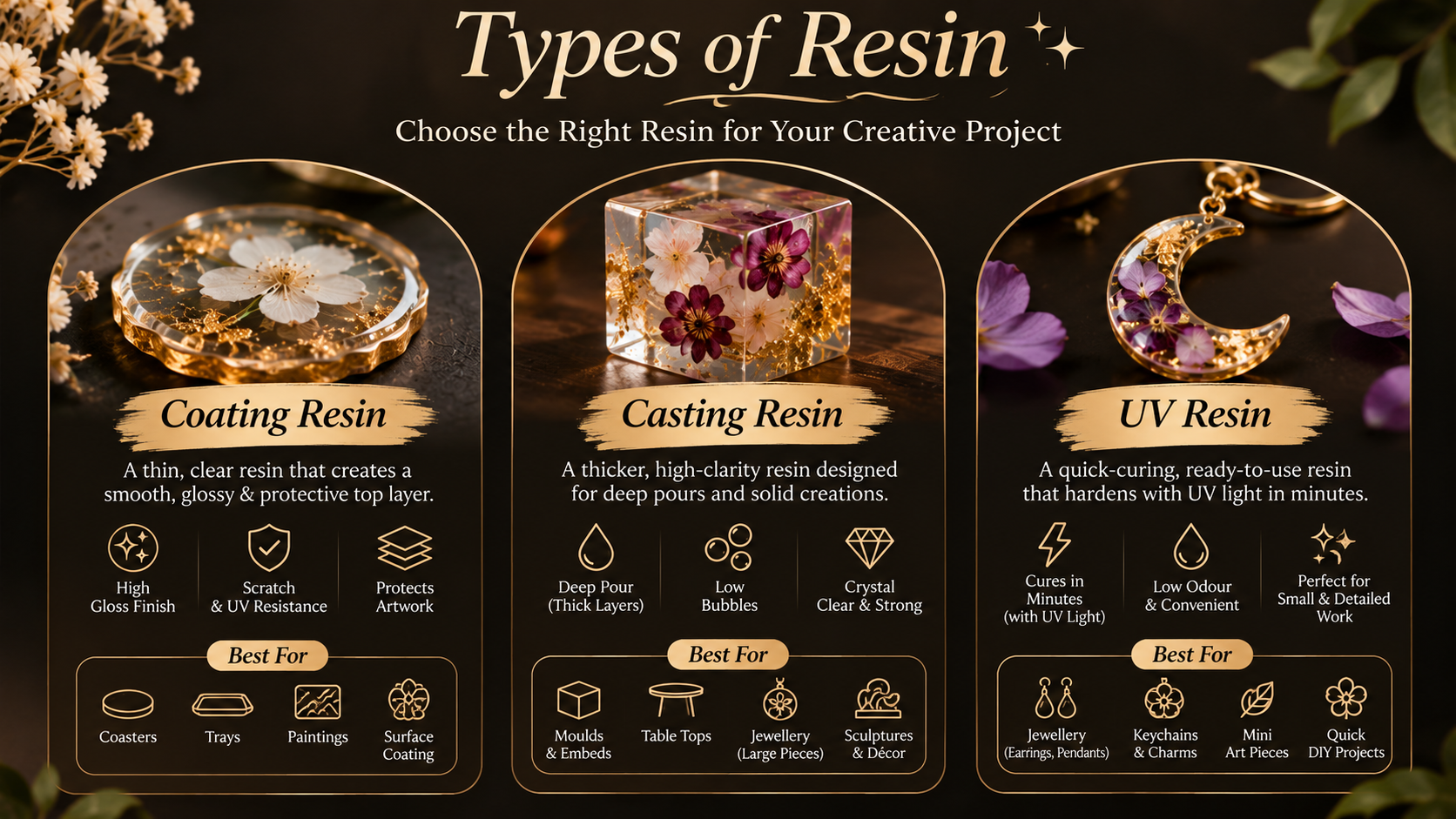
- Art/coating resin: Thin and self-leveling, with a glossy finish. Good for coasters, trays and paintings.
- Casting (deep pour) resin: Thicker and slower to cure. Meant for moulds and thick layers.
- UV resin: Cures under a UV lamp in minutes. Good for small jewellery pieces, not large pours.
Always check which type your product is. Using coating resin for a thick pour can cause overheating and cracks.
Basic Materials You Need
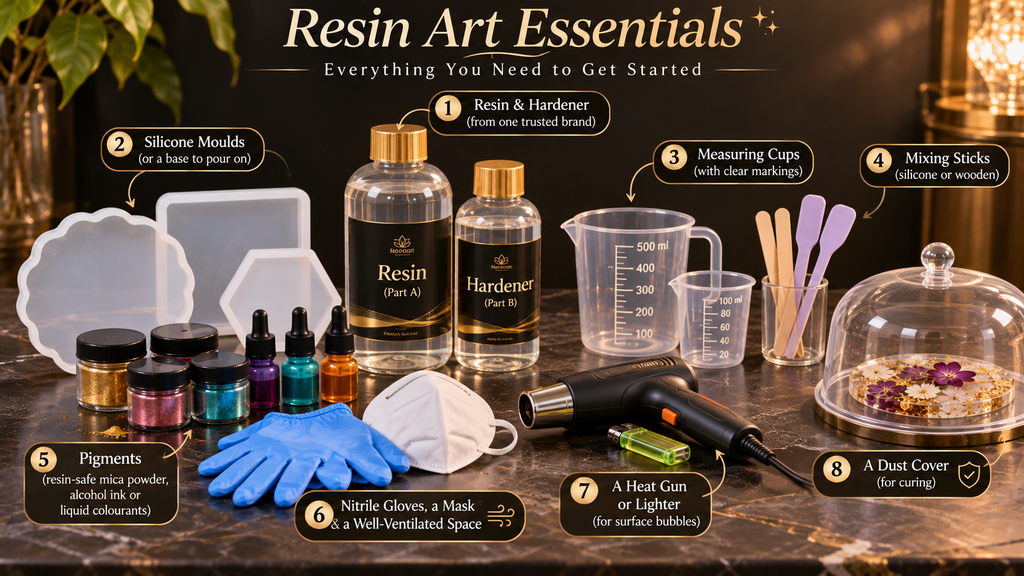
- Resin and hardener (from one trusted brand, not mixed across brands)
- Silicone moulds or a base to pour on
- Measuring cups with clear markings
- Mixing sticks (silicone or wooden)
- Pigments: resin-safe mica powder, alcohol ink or liquid colourants
- Nitrile gloves, a mask and a well-ventilated space
- A heat gun or lighter for surface bubbles
- A dust cover for curing
Step-by-Step: Your First Pour
- Prepare your workspace. Use a flat, level surface and cover it. Keep the room clean and dust-free.
- Measure accurately. Follow the mixing ratio on your product’s label. Ratios differ by brand, so never guess.
- Mix slowly for 3 to 5 minutes. Scrape the sides and bottom of the cup. Unmixed resin stays sticky forever.
- Add colour sparingly. Pigment should stay within the limit your resin recommends, otherwise it may not cure properly.
- Pour and remove bubbles. Pass a heat gun briefly over the surface. Don’t hold it in one place.
- Cover and cure. Most resins are touch-dry in about 24 hours and fully cured in 48 to 72 hours. Check your product’s instructions.
5 Common Beginner Mistakes
- Wrong ratio. The #1 cause of sticky, soft resin.
- Cold or humid conditions. Resin cures best at moderate room temperature. Cold slows curing and traps bubbles.
- Rushing the mix. Under-mixing leaves soft patches.
- Skipping safety. Resin can irritate skin and lungs. Always use gloves and ventilation.
- Buying the cheapest option without checking quality. Poor resin can yellow, stay tacky or cure unevenly.
How to Choose a Good Resin Supplier
- Clear product descriptions with the mixing ratio and cure time
- Genuine batch consistency and proper packaging
- Support when something goes wrong
- Pan-India shipping with safe handling
At Anjali Resin Mart, we supply resin, hardeners, pigments, moulds and tools to artists across India, so you can get your whole starter kit in one place.